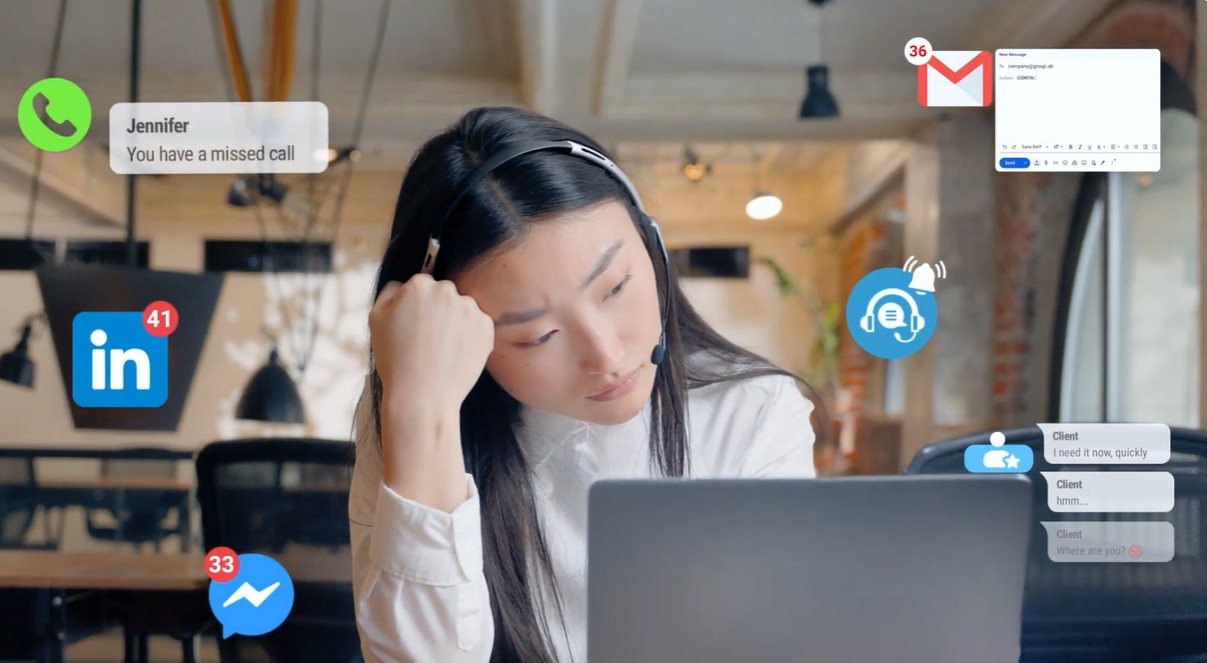

The customer has purchased the product 5 times. They have been chatting with the customer service representative since last week. They have provided all the necessary information. However, when they call back, they still have to explain the problem from scratch.
This is the most common gap in current personalization strategies, where businesses do well at the less important points and neglect the most important ones, where customers really need to be recognized.
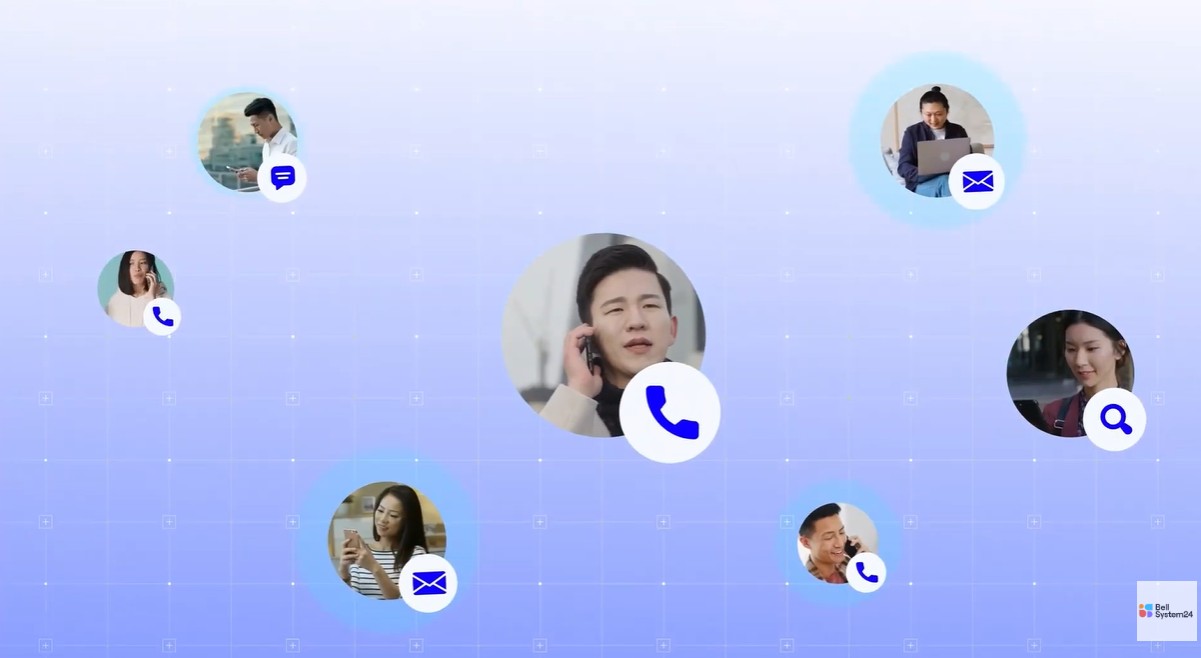
What is personalization of the user experience?
Personalizing the user experience is the process of adapting content, interactions, and services based on the actual data of each individual. This includes behavior, transaction history, preferences, and current context, rather than serving a general script for everyone.
The goal of user experience personalization is to increase conversions, revenue, and customer retention by providing content and services tailored to each individual at the right time.
The differences between personalization and customer segmentation.

When building the solution personalize the customer experience, Businesses need to understand the differences between these two confusing concepts.
- Segmentation It is dividing customers into groups with common characteristics, in order to implement marketing, sales, and service according to those characteristics. For example: Group of students → cheap prices, savings combo.
- Personalization It is a customized experience for each individual based on their actual behavioral data. For example: Customers who prefer low-sugar juices → always set the default to low sugar.
Why has personalization become a mandatory requirement?
In many cases, customers' expectations are not formed by your direct competitors. They are formed by the best experiences they have had. They can reference that experience with Netflix, Shopee, Grab, or any platform that has personalized enough to become the standard.
- They remember that Netflix doesn't recommend movies by general genre; it recommends them based on what you watch, abandon, and rewatch.
- Shopee doesn't show all the products; it only shows what you're able to buy next.
After getting accustomed to that level of personalization, customers bring similar expectations to every other business.
The result is that businesses are not only compared to their competitors in the same industry, but also to the best customer experiences they have ever had. And that gap is becoming increasingly clear in every point of contact.
Three layers of corporate personalization need to be built
Instead of approaching personalization as a disjointed list, businesses need to build it in three layers that are systematic. In order from the outside in, from easy to difficult, and importantly, from little to much influence.
Grade 1 — Personalizing content and recommendations
This is the most common class and is implemented first by many businesses, for example:
- Website suggests products based on viewing history
- The email includes the correct name and suggests the correct product group
- The app displays content based on previous behavior.
The technology to do this is very common and the cost of access is becoming increasingly low.
This layer has real value, but its impact lies primarily in the discovery and purchase stages. When customers encounter problems and need support, this layer is no longer sufficient.
Grade 2 — Personalization at the service interaction point
This is the most important layer, and the one that is most often neglected. When customers contact via any channel (phone, chat, email, Zalo), customer service agents need to have enough context to personalize from the very first sentence. This context can be derived based on purchase history, previous unresolved issues, preferred channel, customer segment, and emotions from the most recent interaction.
Without this, all personalization at the 1st level becomes meaningless. It’s like a customer receiving a perfectly personalized email, then calling and having to reintroduce themselves from scratch. That’s a disjointed experience, and it breaks the entire carefully built journey.
This is exactly the problem that Omni Channel Contact Center resolution: merging data from all channels into a single customer profile, allowing agents to personalize interactions based on the entire history.
Grade 3 — Active personalization
Instead of waiting for customers to contact you, businesses proactively reach out to the right people at the right time with the right message, based on behavioral data and customer lifecycles. For example:
- Notify about renewal before the contract expires.
- Making a phone call upsell the right product for the right customer group.
- Post-experience survey to address the problem before it becomes a complaint.
This layer requires both good data and the ability to execute, reaching the right person at the right time.
Data is the foundation of personalization.
Most businesses don't lack customer data. They lack data. merger.
The transaction history is in the sales system. The support history is in the ticketing system. The call recording is in the call center system. Web behavior is in the analytics platform. The customer profile is in the CRM. And none of these systems can “talk” to each other fully.
The result is that employees look at a piece of the picture and serve based on that piece — while customers expect the employees to see the whole picture. This is why Customer Information Fusion is not an optional technical feature; it is a prerequisite for truly personalized service at levels 2 and 3.
One of the most often overlooked but most informative data sources is voice data. Each call contains the customer's intent, emotions, problems, and expectations in natural language, without the need for any filtering. When converted into text via Speech to Text and analyzed through Speech Analytics, This is the deepest source of personalized insight that businesses can tap into and most are currently leaving untapped.
How to personalize without overloading resources?
Personalization often sounds like it requires a large team, complex technology, and significant budgets. But in reality, properly implemented personalization saves resources because it puts the right people on the right tasks.
Here are five principles for effective personalization without creating operational burdens:
1. Automation of repetitive tasks, personalization of important parts.
Not all interactions require human intervention for personalization; most of today's business activities can leverage the power of AI and automation, for example:
- Track your order
- Confirm the appointment
- Answers to frequently asked questions
With these activities, Voicebot And chatbots can personalize interactions based on customer data without human intervention. In that case, employees are freed up to focus on real-life situations that require judgment and empathy, where human personalization has the greatest impact.
2. Starting from the existing data, not the ideal data.
Many businesses are delaying personalization because they wait for perfect data. But the current data is enough to make a meaningful difference. Start with what you have and improve over time—it’s much more effective than waiting to build a complete system before doing anything.
3. Personalize by segment first, then by individual.
For businesses just starting out, group behavioral personalization is a practical step forward. It is possible to group customers into: new customers, long-time customers, customers at risk of leaving, growing customers, customers with unresolved issues, and satisfied customers.
Each group needs a different approach, and this is a safe but valuable direction where businesses have the opportunity to implement and learn before embarking on individualizing for each customer.
4. Building an automatic context system.
Every time an employee has to ask for customer information again is a waste of time and ruins the experience. The system should automatically display relevant context such as: the most recent interaction history, open issues, customer segments, before the agent says the first word. This is not a high-tech requirement; it is a matter of integrating data between existing systems.
5. Measure the impact to know what the next investment should be.
Not every personalization effort produces the same level of impact, and not every touchpoint needs personalization. During implementation, it is necessary to monitor the impact of personalization at which touchpoints are actually improving business efficiency. For example: Which personalization points increase CSAT, where is FCR increasing, where is churn decreasing, where is revenue increasing.
That data shows where additional investment is needed and where simplification can be achieved; measuring this prevents companies from spreading resources evenly across everything instead of focusing on where real value is created.
Measuring the effectiveness of personalized user experiences
Personalization is not a goal; it is a means to achieve specific business results. Therefore, measuring effectiveness should be linked to those results, not to intermediate performance metrics (e.g., time on page, bounce rate, CTR...).
CSAT and NPS According to the contact point: Track individually for each channel and interaction type. Which channels are producing the clearest CSAT improvements? Which touchpoints are still dragging down NPS despite investments in personalization? The answers tell you where the next investments should be focused.
FCR by segment: If personalization is working properly, the FCR should improve. Monitoring the FCR by customer group reveals which groups are being served well and which groups still have room for improvement.
Customer Lifetime Value (CLV) by group is personalized: This is the most important long-term indicator. Comparing CLV between groups of customers that have access to fully personalized experiences and those that do not. Over time, the difference in this indicator is the most convincing evidence of the value of investing in personalization.
Churn rate According to the intervention points: If proactive personalization is in place (e.g., reminding customers to renew at the right time, follow-up after complaints, outbound marketing to the right audience), the churn rate in the groups that are being targeted should be lower than the groups that are not targeted. This is the most direct measure of the impact of the 3rd layer in the personalization strategy.
Conclusion
With the development of AI, personalized technology is becoming increasingly sophisticated, but the basic principle remains unchanged: customers want to be recognized, remembered, and served based on what you already know about them.
For businesses operating Contact Centers, the most practical starting point is not investing in complex AI, but ensuring that employees have the information to recognize customers from the very first second, across all channels and every interaction.
Bellsystem24 Vietnam – A consulting and implementation unit that provides personalized solutions to enhance customer experiences through platforms Omni Channel Contact Center With experience from more than 300 real projects.