
Customer service over the phone is not just about answering questions or resolving complaints; it is also an opportunity to build trust, retain customers, and enhance brand image. A call that is unprofessional can immediately lose the customer’s goodwill, whereas a well-prepared call with a logical script can create satisfaction and even lead to repeat customers.
So how can we build a professional customer care scenario and increase real satisfaction?
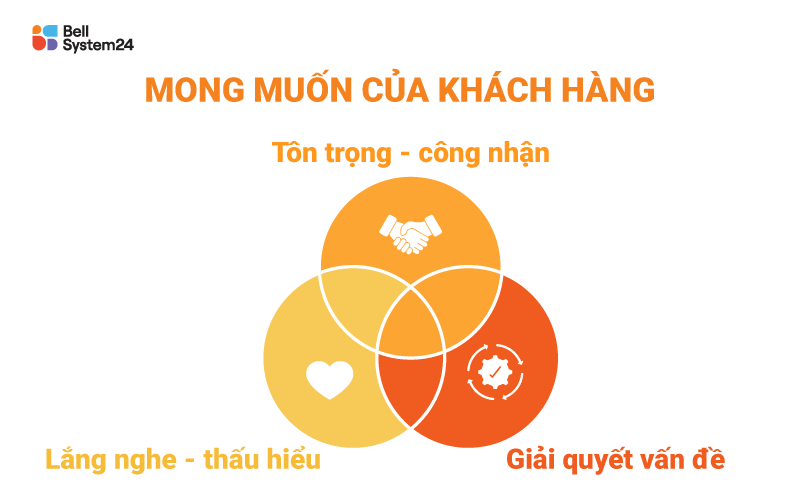
The golden rule when building a customer care scenario
Before going into the details of each scenario, you need to master some core principles to ensure that every call leaves a positive impression:
✅ Always put the customer first
Every customer has a different story. Listen more, ask the right questions at the right time to understand the customer's needs rather than just focusing on presenting your products and services.
✅ Friendly, natural tone of voice
Customers may not remember all the content you say, but they will remember the emotions you bring. Make sure your voice is clear and warm, and that it shows genuine interest.
✅ Personalize the call
Instead of using a machine script, personalize the conversation by calling the customer’s name and mentioning information related to their purchase history.
✅ Keep the conversation short and concise:
Customers don't want to spend too much time on a call.
Things worth watching: Professional customer care skills and processes
The process of building the CSKH call script
For managers and CS staff who want to build their own scenario based on their needs.
| Step | Content | Examples/Notes |
|---|---|---|
| 1. Determine the purpose of the call | Clearly define the goals before building the script: - Thank you, customer. - Remind about maintenance schedule - Resolving complaints - Survey of satisfaction | For example: "Hello, [Name], I'm calling to ask about your experience using my product; is it convenient for you to have a quick chat now? |
| 2. Research on AI and personalizing content | Gathering information before the call: - Purchase history - Problems the KH has encountered - Habits, interests | Note: Personalization by calling the customer’s name, mentioning the products or services they have used in the past. |
| 3. Building the script content | Consists of 4 main parts: 1. Introduction: Introduction and building rapport 2. Main content: Depending on the purpose of the call 3. Handling arising situations 4. End the call | For example: "Hello, [Name], I am [Name from Company], I am calling to assist you with [Product/Service]." |
| 4. Review and adjust the scenario based on actual data | Listen to customer feedback to improve the script: - Which part of the customer is most satisfied? - Which questions are usually annoying? - Has the approach been effective? | Tip: Don't use a pre-made script; be flexible and adapt to each client. |
| 5. Training for employees | Employees need to be trained: - Natural voice - Handling difficult situations and customer objections - Maintain a positive attitude, be patient | Suggestion: Organize role-play sessions to allow employees to practice and improve their communication skills. |
Effective phone customer care scenarios
Scenario 1: Call to thank you after making a purchase
Purpose: Create a positive impression, confirm that the customer has received the product/service, and ensure they are satisfied.
Sample script:
💬 Staff: “Hello [Customer Name], I am [Employee Name] from [Company Name]. I am calling to thank you for trusting our products/services. Have you received the goods yet? Have you encountered any difficulties using them?”
(Waiting for customer feedback)
💬 Staff: “Excellent! If you have any problems, please contact me. I am always ready to help. Have a good day!”
Note: If the customer is not satisfied, proactively help them instead of waiting for them to find you themselves.
Scenario 2: Call to schedule maintenance/regular service
Purpose: Actively taking care of customers, helping them not miss out on important services.
Sample script:
💬 Agent: “Hello [Customer Name], I am [Agent Name] from [Company Name]. I am calling today to remind you about [maintenance service/regular product] that you used last time. It is time for maintenance now. Do you want to schedule an appointment?”
(Waiting for customer feedback)
💬 Staff: “Yes, I can schedule an appointment [date/time]. If you have free time at other times, I will be happy to assist. I hope you have the best experience with my service!”
Note: If the customer refuses, don't force them; instead, politely acknowledge their refusal and schedule a later date.
Scenario 3: Support customers when they have a complaint
Purpose: Resolving problems professionally, helping customers feel respected and heard.
Sample script:
💬 Staff: “Hello [Customer Name], I am [Employee Name] from [Company Name]. I am sorry to hear that you are experiencing problems with [product/service]. I would be happy to help you have a better experience. Could you please tell me what the specific problem is?”
(Waiting for the customer to present)
💬 Staff: “We understand the inconvenience you are experiencing and sincerely apologize for this. We will [provide a solution: replacement, refund, guidance on how to fix it…]. Do you think this solution is appropriate?”
Note: Always maintain a calm attitude, do not argue with customers even if the problem lies on their side.
See also: How to handle customer complaints when transferring jobs
Scenario 4: Call to survey satisfaction levels
Purpose: Collecting customer feedback to improve the service.
Sample script:
💬 Staff: “Hello [Customer Name], I am [Employee Name] from [Company Name]. Could you please take a moment to share with us your experience using the product/service? It should only take about 2 minutes!”
(Wait for the customer to agree)
💬 Staff: “Are you satisfied with the product/service from us? If there are any areas you would like to improve, we are more than happy to listen to your feedback and serve you better.”
Note: Record both positive and negative feedback, then send it back to the relevant department for improvement.
See also: Sample old customer care message
CSKH is not just a call, but an experience!
A good customer care scenario not only helps increase customer retention rates but also creates memorable experiences. When customers feel cared for, they are more likely to return and recommend your brand to others.
Therefore, invest time in creating a truly comprehensive and flexible customer care scenario. Because customer satisfaction is the most solid foundation for a business to grow sustainably!
Outsource full-service customer care.
Bellsystem24 Vietnam is the leading unit in Vietnam in the implementation of outsource customer service, With experience operating call centers for 200+ businesses in Vietnam and worldwide. Contact us now for professional customer care solution advice.