
Telemarketing (telephone marketing) is a form of using the telephone to reach potential customers.
Telemarketing is often used for purposes such as:
- Promote and introduce products and services
- Call care and reactivate old customers
- Information surveys, market research.

The benefits of telemarketing for businesses.
In today’s digital era, businesses can implement marketing in various forms, but telemarketing remains a popular choice for many businesses due to its distinct advantages.
- Accurate and quick access: Connect with potential customers easily through a call.
- Maintain customer relationships: Easily maintain regular customers, implement remarketing to re-engage them.
- Personalization campaign: Call center agents can communicate with customers in a personalized way, because they already have detailed information about the customers.
- High conversion potential: In many fields, telemarketing has a higher conversion rate than other forms of marketing thanks to its persuasiveness.
- Easy measurement of effectiveness: Businesses can quickly track metrics such as call volume, answer rate, conversion rate, and revenue.
Disadvantages of telemarketing
- Limited reach: depends on the amount of available data, making it difficult to expand the market.
- High cost of maintaining a team: Although not as expensive as advertising, telemarketing still requires investment in infrastructure (call center software, CRM) and paying salaries for employees; this cost can be considered a type of fixed cost of the business.
- Proper employee training is necessary: In addition to product knowledge, telemarketing employees need to be trained in professional communication and handling situations over the phone.
- Regulatory requirements: Many countries have strict regulations regarding advertising calls; businesses may face risks if they violate them. In Vietnam, you can refer to Decree No. 91/2020/ND-CP on combating spam messages, spam emails, and spam calls
When should telemarketing be deployed?
Telemarketing has its own advantages and disadvantages, but in general it is a method that provides high conversion efficiency in certain situations. It is often used when:
Specific customer file marketing is needed
Businesses have contact lists and know the profiles of their target customers to provide the appropriate approach and personalized messages. Especially suitable for large groups of older customers.
- Re-marketing of old customers: Re-marketing of old customers, conducting additional sales, and cross-selling products.
- Products are of high value, the buying and selling process is complex: Telemarketing provides businesses with the opportunity to present and guide customers in detail.
- When you need to boost sales during a certain period: High-traffic seasons are an effective time to run short-term telemarketing campaigns, which increases the reachability of the overall marketing campaign.
Some industries are suitable for implementing telemarketing.

- Education: Promotion announcements, course consultation.
- Financial services, banking: Program for opening credit cards and loans.
- Tourism: Hotel booking promotions, resorts, tours.
- Real Estate: Welcome to real estate, launch a product, survey customer needs.
- Television, Telecommunications: Introducing the package promotion
- Health: Functional products.
- Spa, beauty, fitness: Promotions, try-on services.
The differences between telemarketing and telesales.
These are two forms that are easy to confuse, which can be distinguished as follows:
| Criteria | Telemarketing | Telesales |
|---|---|---|
| Main goal | Attracting customers, introducing products/services, and building brand awareness | Direct sales, closing deals, or boosting sales. |
| Scope of operations | More broadly, this includes surveys, promotion, information gathering, and building relationships with customers. | It is narrower, focusing primarily on closing the transaction. |
| Target customers | Both potential customers (who don't know about the business) and current customers. | They are usually high-potential buyers or current customers. |
| The process | It is the first step in the customer journey, which can lead to telesales. | It is the next step after telemarketing, focusing on closing the deal. |
| Communication methods | It serves as advisory, introduction, and attraction of customer’s interest. | Persuasive, aimed at getting customers to make a purchase decision. |
| Required skills | - Good communication skills. - Research and information gathering skills. - The ability to build long-term relationships. | - Strong sales skills. - Ability to handle rejection and negotiation. |
| Access time | It can take a long time to nurture relationships with customers. | They usually take place in a short period of time with the goal of achieving immediate sales. |
| Measuring effectiveness | Based on the number of potential customers generated, the level of brand awareness, or the data collected. | Based on the number of successful transactions or the revenue generated. |
| For example | - Invite customers to attend the seminar or experience the product. - Survey customer opinions about new products/services. | - Call to sell insurance packages or financial products. - Finalize the order after the customer expresses interest. |
| Costs and resources | The cost is lower than telesales because it does not require in-depth sales skills. | There is usually a higher cost due to the need for a team of highly skilled employees. |
The tasks of telemarketing employees
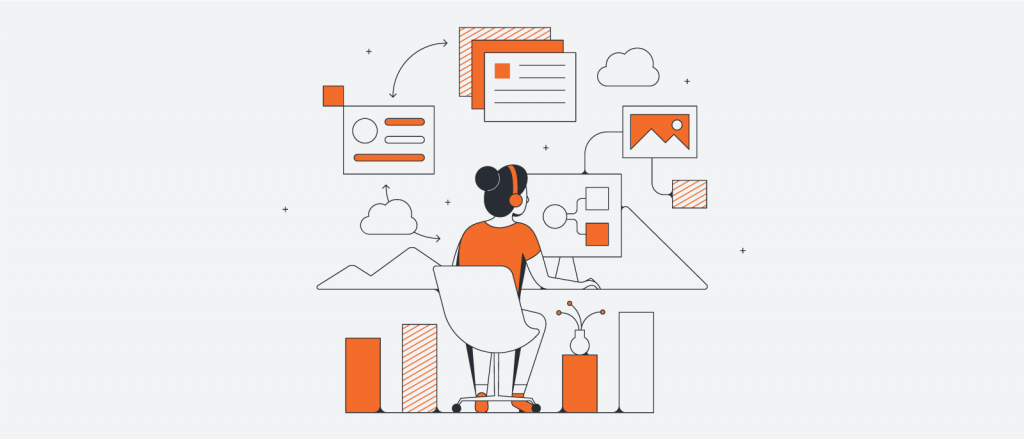
1. Collecting customer information
- In the event that the company does not provide customer information, telemarketing agents need to identify the customer profile and collect it from social media platforms, communities, or other sources.
2. Prepare before the call
- Customer research: Based on the customer list, conduct research on characteristics, preferences, and behaviors to develop a suitable approach.
- Call script: Develop a call script that is tailored to the target customer, including opening, presentation, persuasion, and handling rejection.
3. Make a call
- At the beginning of greeting customers, please allow the customer to present the product and service information in a concise and engaging manner.
- Understanding customer needs: Flexibly ask additional information gathering questions and identify customer needs.
- Persuading customers
- Handling of rejection (if applicable)
4. Collecting and processing information
- Record information: Record call information, requests, concerns, or reasons why customers reject entering the CRM system.
- Customer segmentation: Assess customer status, conversion potential, and transfer to the sales team
5. Reporting and improvement
- Prepare progress reports and performance reports (number of calls, conversion rate, etc.) for superiors
- Analyze and plan to improve work performance.
Portrait of a professional telemarketing employee
To become a good telemarketing agent, you need the following skills.
1. Communication skills
In telemarketing work, communication plays an extremely important role. This is the decisive factor that helps employees build good relationships with customers, improve sales efficiency, and maintain customer satisfaction. Communication skills can be divided into the following elements:
1.1 Listening skills
Active listening is a fundamental element of effective communication. If you do not pay full attention when customers are speaking, it is easy to misunderstand their needs or wishes. This can lead to ineffective customer service or even make the customer feel uncomfortable.
1.2 Effective feedback skills
Feedback is a way for you to clarify and confirm the information that the customer has just shared. This not only helps identify the exact problem the customer is facing but also creates an opportunity for the customer to feel heard and understood.
- Response to the content: Summarize the customer's concerns and use their own words to confirm that you understand the issue correctly.
- Responding to emotions: When customers share their emotions, showing an understanding of their feelings will help them feel respected and acknowledged. Use words to name the emotions and reflect back what they are feeling.
1.3 Persuasion skills
Persuasion skills in telemarketing are not about imposing your ideas on customers; rather, it is about making them realize the true value of the products or services you offer. To be successful, telemarketing employees need to understand customer needs, build strong relationships, and clearly communicate the benefits that the products/services will bring to them.
2. Skills in identifying the psychological and personality characteristics of customers
In “The Art of War,” there is a saying: “Knowing yourself is knowing your enemy; a hundred battles are not dangerous.” Similarly, in marketing, if we understand the psychology and characteristics of each customer, convincing them will become easier, especially for difficult customers.
3. Information extraction skills
During the interaction, telemarketing agents need to have enough information to accurately identify the problem that the customer is facing. In addition to the information provided by the customer, it is necessary to extract additional important information to persuade the customer in certain situations.

4. Planning and time management skills
The nature of the job requires telemarketers to make a large number of calls within a certain period of time, so planning and time management skills are extremely important. By defining clear goals, prioritizing them, and dividing them into multiple stages, you can ensure the workload, improve efficiency, and reduce stress.
Telemarketing service by Bellsystem24 Vietnam
With experience in operating call centers since 2006, we have successfully implemented hundreds of telemarketing campaigns for major brands such as Viettel, VTVcab, UOB, K+, PVI.
Tim understands: Professional Telemarketing Service